

Germany 2006, A Nation Finally Arrives

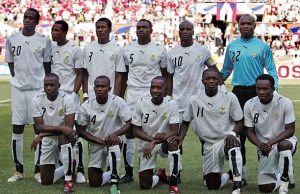
Africa had long argued for its rightful place at football’s top table. Ghana had been making that case since the 1960s, when the continent famously boycotted the 1966 World Cup in protest at being denied a dedicated qualification slot. We were good enough then, consecutive AFCON titles in 1963 and 1965 suggested as much but the world wasn’t listening.
Forty years later, the Black Stars finally got their moment.
After nine previous failed qualification attempts, Ghana secured their maiden World Cup berth and arrived in Germany in 2006 as debutants full of intent. Coach Ratomir Dujković had drilled into the squad a belief that they belonged. They proved it immediately. Placed in Group E alongside eventual Champions Italy, Czech Republic and the United States, Ghana lost their opener to Italy, but rallied to beat the Czechs and the Americans, finishing second in the group to advance to the Round of 16.
There, we ran into Brazil. The Samba Boys were too much for of a side for us, winning 3-0, but no one could diminish what the Black Stars had achieved. A nation had watched in rapture. Africa had its team, and Ghana had found their stage.
South Africa 2010, One Kick Away from History
If 2006 was the introduction, 2010 was the masterpiece and the tragedy.
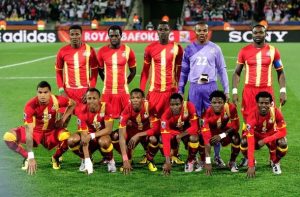

The tournament was held on African soil for the first time, and Ghana carried the weight of a continent’s expectations throughout the tournament. The Black Stars came through Group D, navigating past Serbia, Australia and a spirited 1-0 defeat to Germany. In the Round of 16, they defeated the United States in extra time through Asamoah Gyan. The continent erupted.
Then came the quarter-final: Uruguay. Soccer City, Johannesburg. A crowd of more than 84,000. A match that would be talked about forever.
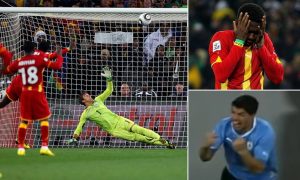
The game was locked at 1-1 through 120 minutes. Sulley Muntari had put Ghana ahead with a thunderous strike; Diego Forlán had equalised. Deep into extra time, as the clock ticked towards a penalty shootout, Dominic Adiyiah’s header was clawing toward the Uruguayan goal. Luis Suárez, standing on the line, punched it away with his hand. Red card. Penalty. Ghana and Africa, one kick from a historic semi-final.
Asamoah Gyan, Ghana’s best player at the tournament, stepped up and struck the crossbar. The penalty went over. Uruguay survived. They won the shootout 4-2.
The cameras caught Suárez celebrating wildly in the tunnel as an entire continent held its head in disbelief. The handball would pass into football folklore and Ghana’s answer to the Hand of God. The wound has never fully healed.

Brazil 2014,The Group of Death Bites
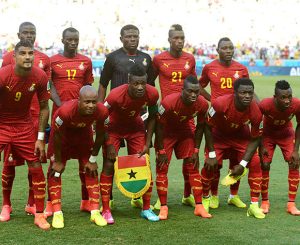

South Africa had raised the bar impossibly high, and Brazil brought a dose of harsh reality.
Ghana was drawn into Group G alongside Germany, Portugal and the United States, a brutal assignment. It began badly. A John Brooks header in the 86th minute gave the USA a 2-1 win in the opener, despite Kevin-Prince Boateng’s early goal. Against Germany, the Black Stars managed a spirited 2-2 draw, with some pundits labelling it as the best game of the tournament. André Ayew and Gyan both got on the scoresheet, but it wasn’t enough to matter. Against Portugal in the final group game, an own goal from John Boye gave Portugal the lead before Gyan equalised with a header, but Cristiano Ronaldo sealed it late.
What lingered beyond the results was an air of dysfunction. Reports of internal tensions over bonuses and a general lack of cohesion off the pitch made headlines. The players who had made the nation sing in 2006 and come so close in 2010 were ageing; the next generation hadn’t yet fully arrived. Ghana finished bottom of the group, and the descent from the heights of South Africa felt steep.
Russia 2018, The Gap Year That Stung
For the first time in over a decade, the Black Stars were absent. Ghana failed to qualify for Russia 2018, falling short in the final round of CAF qualifying. The nation that had once been on the cusp of a World Cup semi-final watched the tournament without a seat at the table. It was a necessary, if painful, jolt.
2022 Qatar, Vengeance Denied, History Repeated
Ghana returned to the World Cup via a nail-biting playoff against Nigeria, a 1-1 aggregate draw in which away goals sent the Black Stars through. Otto Addo, a former Ghana international, was appointed head coach and guided the side to Qatar.
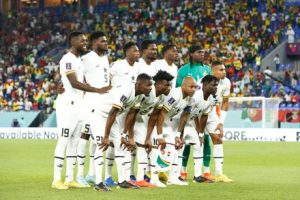

The group was extraordinary. Group H: Portugal, Uruguay, South Korea and Ghana. Suárez was still playing for Uruguay. The ghosts of 2010 were very much present.
Ghana’s campaign opened with a 3-2 thriller against Portugal. Cristiano Ronaldo put Portugal ahead, André Ayew equalised, but Portugal pulled away. Ghana nearly snatched something remarkable when Osman Bukari’s header made it 3-2 in the 89th minute, but time ran out. In the second game, against South Korea, Ghana led 2-0 at half-time through Mohammed Kudus and were heading through. A South Korean comeback to 3-2 made it nervy, but Ghana held on.
Then came the rematch the world had been waiting for. Ghana vs Uruguay. Suárez started. André Ayew was awarded a penalty in the 21st minute with the chance to repay Gyan’s miss from 12 years ago. He stepped up and was denied by goalkeeper Sergio Rochet. Minutes later, Giorgian de Arrascaeta scored twice in six minutes for Uruguay. The game ended 2-0. Ghana kicked out.
A second successive group stage exit.
USA / Canada / Mexico 2026, The Redemption Arc Begins
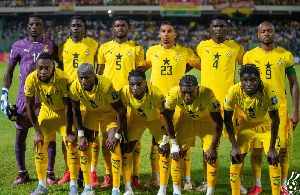

Failing to qualify for the 2025 Africa Cup of Nations and facing scrutiny, Ghana entered CAF’s Group I for 2026 qualification with something to prove. They answered emphatically.
Otto Addo, back in the role, built a side around a new generation, Mohammed Kudus of Tottenham, Thomas Partey, Jordan Ayew, and Iñaki Williams, who switched allegiance from Spain in 2022. They ran through their group, winning eight of ten matches, scoring 23 goals.
On 13 October 2025, at the Accra Sports Stadium, before a jubilant home crowd, Kudus tapped home Thomas Partey’s cross in the second half to beat Comoros 1-0. Ghana was through. Twenty-five points from a possible 30. Group I winners by a clear margin. The fifth African nation to qualify for the expanded 48-team tournament.
The Long View
Ghana’s World Cup story is twenty years old and already full of landmark moments. A debut in 2006 that announced Africa’s arrival. A quarter-final that broke a continent’s heart. Two group stage exits that tested the nation’s patience. And now, a fifth appearance with a younger squad, a new coach, and a point to prove.
The unfinished business of Soccer City on 2 July 2010 remains the defining chapter. One day, perhaps, the Black Stars will get to write a new one.