


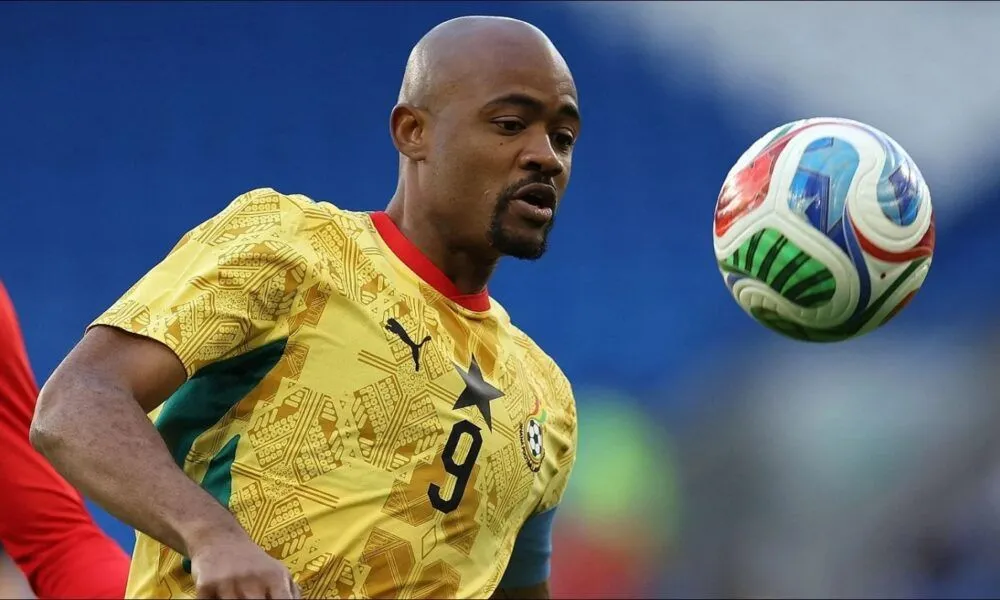
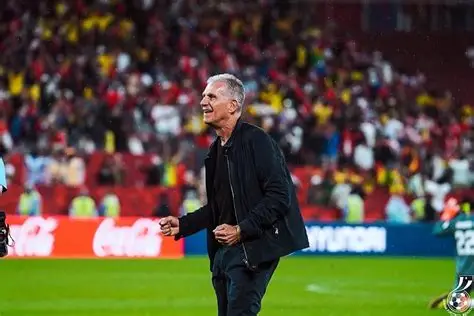
Carlos Queiroz has managed Real Madrid, Portugal, and Iran. He has handled dressing rooms filled with global superstars and navigated the political minefields that come with managing national teams across three continents.
In a career spanning four decades, he has faced more difficult decisions than most coaches will encounter in a lifetime.
But ahead of Ghana’s Group L clash with England on Tuesday, June 23, the most difficult decision on his desk faces him. Does Jordan Ayew captain, national icon start against England?
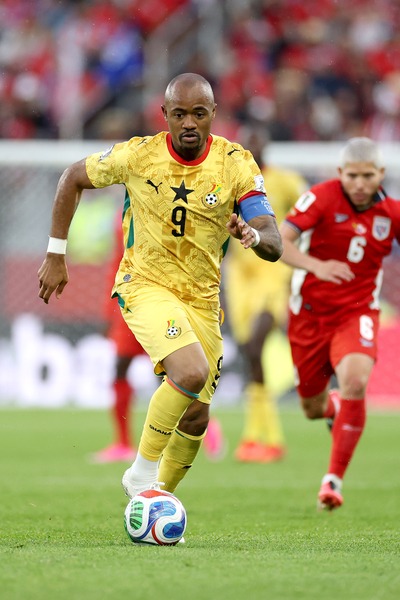

Or does the performance against Panama make the decision for the coach, however uncomfortable that may be?
There is no clean answer. There is no version of this decision that does not carry weight, consequences, and the risk of being wrong. But the decision must be made, and made correctly.
The Case Against Starting: The Panama Evidence
Begin with the facts, because they are not kind. Jordan Ayew started Ghana’s opening World Cup fixture against Panama and played 87 minutes.
In those 87 minutes, he completed passes at a respectable rate only because virtually every pass he attempted went sideways or backwards, won no aerial duels of consequence, took no shots, and created not a single clear chance for a teammate.
He was caught offside in the first half in a position that better movement and sharper awareness would have corrected. Perhaps the defining image came midway through the second half when Brandon Thomas-Asante burst into the penalty area with strength and conviction before delivering a dangerous low cross across the six-yard box.
It was the type of opportunity strikers anticipate instinctively, Jordan Ayew was nowhere near it. Minutes later, he was substituted. Panama’s centre-backs were barely troubled by his presence.
The most damning evidence of all is not statistical. It is sequential. Ghana were static, disjointed, and toothless for the period Ayew was on the field. Within minutes of his substitution, the game changed.
Thomas-Asante brought energy and physicality that had been entirely absent. Fatawu Issahaku brought pace, directness, and an unpredictability that Panama’s organised backline had not encountered all evening.
The team breathed. The team moved. The team scored. Ghana won a game that Ayew, for all his leadership and experience, had contributed almost nothing to winning.
When a captain’s substitution improves his team that visibly and that immediately, any coach worth his salary must take notice.
The question Queiroz must ask himself before Tuesday is this: against an England side that pressed with devastating intensity against Croatia and exploited every pocket of defensive space, can Ghana afford to carry a striker who presses little, wins little, and moves little?
A front man who does not press is not just an attacking problem, he is a structural one. He creates imbalances as he leaves midfielders exposed.
He invites England’s fullbacks to push higher and wider than they should be allowed to go. Ayew’s poor Panama display, measured against England’s pace and structure, is not a minor concern. It is a matchday risk.
The Case For Starting: What Ayew Still Brings
Before the verdict is delivered, the defence must be heard. Jordan Ayew has been the spine of this Black Stars squad for the better part of a decade.
He scored seven goals and provided seven assists in World Cup qualifying, not the numbers of a passenger, but of a player who still performs when it matters.
His understanding of the game at the highest level, how to press intelligently when the moment demands it, how to link play and draw defenders out of position, how to read a game’s rhythm and influence it quietly does not disappear because of one bad night in Toronto.
There is also the question of what Ayew does that none of his replacements yet replicate: he leads.
Not loudly, not theatrically, but in the way experienced players organise the lines around them, communicate defensive triggers to the front press, and hold a team’s shape when the game is difficult and the pressure is building.
Thomas-Asante has six international caps. Fatawu Issahaku, for all his electric talent, is 22 years old and playing in his first World Cup.
Against England, in a packed New England stadium, with the full weight of the tournament’s expectations pressing down experience is not a trivial quality. It is precisely what separates players who perform in those environments from those who freeze.
The Challengers: Fatawu and Thomas-Asante Demand Their Chance
The truth, however, is that both challengers earned their opportunity against Panama in ways that cannot be politely explained away.
Fatawu Issahaku was a different player entirely from the moment he entered the field, faster, more direct, more willing to commit defenders and drive at the space behind them.
His pressing was relentless where Ayew’s had been absent. He created the horizontal stretching that opened Panama’s defensive structure in the final quarter of the game.
Against England’s fullbacks who push high and create the space in behind that fast, direct wingers exploit, Fatawu could be one of the most dangerous players on the pitch.
Thomas-Asante was not just good against Panama. He was decisive. His burst and the perfectly weighted cross that led to the winning goal were produced under the most intense pressure the 2026 World Cup had offered any Ghanaian player to that point. He held the ball up against physical defenders.
He drove at his opponent without hesitation. He wore the number 10 shirt on the biggest stage of his career and did not flinch.
Queiroz’s Verdict: The Hardest Call of HIs Ghana Tenure
Here, then, is the dilemma in its sharpest form. Queiroz has a captain who underperformed against a side Ghana were expected to beat comfortably.

He has two substitutes who transformed that match and are both demanding starting roles against England. And he has a nation watching every decision he makes with the intensity that only a World Cup knockout scenario can produce.
The pragmatic answer, the one that form, tactical logic, and the Panama evidence all point toward is to start Fatawu and Thomas-Asante, with Semenyo completing the front three, and bring Ayew off the bench in the second half if Ghana need experience, composure, or a different physical presence to manage a result.
This is not a statement that Jordan Ayew is finished, it is an acknowledgement that football rewards form, and that right now, two younger, fresher, hungrier players have done more in one half of football to deserve a starting place than their captain managed in more than 80 minutes.
The armband does not guarantee the shirt. It never should.
Read more: Curtis Jones set to remain at Liverpool after Inter Milan’s £20m bid was rejected
RB Leipzig would be open to selling Liverpool target Yan Diomande for £112m
Liverpool target Yan Diomande hints he would be open to move to Premier League